谈话记录


OELP Overall Reflection
Throughout this OELP trip to Beijing/Tianjin, I personally feel that I have learnt and also benefited alot from it. It was really an eye opener for me to see historical architectures like 故宫紫禁城 where the last dynasty of emperors in China history had lived. I think that it is definitely very different from listening about the Manchu Empire in history lessons and actually visiting places like the palace and 颐和园 which everyone knew was built by the Empress Dowager Ci Xi with funds that were officially meant for the military during a time of starvation in China. At Beijing/Tianjin, we got to taste authentic Beijing/Tianjin food and actually really got to know more about their eating habits and delicacy. I would never have known that the people in Beijing/Tianjin eat dumplings just the way we eat rice as a main course. The difference in culture and tradition could be seen from the difference delicacy in Singapore and China. The opportunity to visit the school in Tianjin was really a valuable one for me as I had never been to a secondary school in China before and listened to lessons conducted. I have to say that the education system is very different from Singapore and I could draw a very contrasting conclusion. I really loved the trip to the supermarket in Tianjin as I had never realised before just how many different brands there are for just one item like oil. they definitely have a much broader range of price and product selection compared to Fairprice/Giant etc. in Singapore. I feel that this OELP trip has allowed me to have experience I could never have gotten if I had came on my own to Beijing/Tianjin and helped me realised many things like even the price of a bottle of water.
OELP Daily Reflection
Day 7:
HOME SWEET HOME!
After an early breakfast and a quick lunch, we left on a plane back to Singapore. This OELP trip had truly been a memorable one for me. I got to spend more time with my classmates, understanding them better and also learning and experiencing things which are impossible to experience in Singapore. We are truly privilege for being able to go on this trip with the school.
Day 6:
OUTING WITH OUR BUDDIES!
I really anticipated the outing day as we would be experiencing life of a student living in Tian Jin. Our buddies came to fetch us from the school and we left for Mark's buddy's house. It was just around the corner and we walked there pretty fast. I got to know my buddy better as we walked and exchanged interests. After arriving at the house, 刘明禹's grandparents were so nice and friendly to us. It was actually shocking though that they all thought that Singaporean kids actually only speak English and the first thing his grandfather asked me was "丫头你会讲汉语吗?" I was taken off guard and immediately replied in Chinese that I am able to converse comfortably in Chinese and he didn't have to worry about any language barrier. He seemed really relieved and expressed his concern before that his grandson wouldn't be able to understand our level of English.
 After exchanging gifts we watched television and waited for 刘明禹's father to come back. His father was really friendly and nice and kept asking us questions about life in Singapore. He drove us to a 'park' which I thought at first was a regular park with perhaps flying fox and like flowers. It turned out to be a water theme park. It was super fun and we rode on lots of rides (not those dangerous ones). They were being really nice, paying for all the rides. I didn't notice at first about why we didn't have to pay for rides but Mark told me he saw one paying for it while the other entertained us. We offered to pay for the rides but they kept insisting that it wasn't necessary. I thought that it was being really generous of them as we don't know them really well. I had the fun in a lifetime playing all these cool rides I never got to experience before.

I got really wet though, my whole hair was soaked with water until I was wrenching out water like a cloth from my hair. But the great thing was that the weather was so dry that my whole shirt and hair got totally dry is 20 minutes. I was so glad I didn't have to go back to school soaked and looking like a mess. I even played the bumper car thing there. It was so AMAZING! I should have played it in Singapore but I always thought it looked too violent. I actually wanted to ride in the same car as Mark so I didn't need to maneuver the car but 耀宇 and 明禹 kept urging me and encouraging me to take the step out to ride a car myself. It wasn't that bad as I expected it to be. It was hard the first time to get used to it and get the hang of it but I somewhat got it in the end. The boys kept having to bump my car though as I got stuck repeatedly in the start. I had so much fun with them and really got to experience life as a Tian Jin student.
 Of course all things must come to an end, we went back to school and I waved my new China buddies goodbye. It was really great knowing them and they have been so nice to us, taking time out to show us around, treating us to food. Their parents were also so hospitable towards us, making lots traditional dumplings for us and taking time out to drive us around. I had an experience of a lifetime, I don't think I would ever forget even when i get like dementia. It has been a wonderful experience in China but I was so desperately missing home at the same time.
Day 5:
TODAY'S THE DAY WE MEET OUR CHINA BUDDIES!
It was scary as I am a little socially awkward? I didn't know how to react if my buddy was some sporty person that cannot understand a indoor person like me. We arrived at the school late unfortunately as the driver seemed to have lost his way due to the many tiny lanes in Tian Jin. Our tour guide told us that even the people born and raised in Tian Jin may get lost as the roads are tiny and complicated.
My first impression of the school was like "Ooo, it looks rather big." We headed towards the main area? of the school and before the door there was a panel of words that said "欢迎新加坡立化中学的学生和老师们”. I was really surprised and it was heart-warming to see them put in effort to make this welcome message to us. We entered the school and their principal came out to greet us and gave us a brief tour around the school before heading to the library to wait for our buddies.
When I first saw my buddy and my classmates' buddies my first thought was "wow they all have the same hairstyle." I realized immediately that all the girls had cut a bob hairstyle and were wearing exercising clothes which were their definition of a school uniform. I thought it was really cool and great that their uniform was so comfortable compared to uniforms in Singapore where girls have to wear skirts. My buddy introduced herself as 李耀宇 and after exchanging greetings and names she led me upstairs to her class. She seemed friendly but I noticed that her accent didn't really sound like a Tian Jin accent but more like a Hebei accent. She had later told me that she indeed was from Hebei and had only moved to Tian Jin last year. I didn't ask her though as I was a little awkward. Together with me was my classmate and his buddy, Mark and 刘明禹. They were apparently heading to the same class and we were a group together.
Mark and I sat at the back of the class and started attending lessons. The first lesson we had with them was English. I was quite happy that I got to experience the English lessons in China as I always wondered what was the English standard in secondary school. I was a little shock that the English teacher was a Chinese lady and she actually taught English in Chinese. Their English lessons were simple as the teacher was teaching things like the 5W1H and sentence structure. However it was a little challenging to understand the teacher's explanation as her accent was too strong. It was overall smooth sailing and the teacher even stopped to ask me if I could understand and if we were taught like that in Singapore. Her question actually stumped me as I didn't know how to phrase my words without sounding rude saying that we were taught these at around primary one approximately? I finally replied her saying that I understood most of the lesson and we are learning English Literature now.
Our next lesson was Math. A few minutes into lesson and I immediately felt that English lesson was heaven. Me and Mark were shocked when the teacher gestured for us to come forward to get math practice worksheets as well. We attempted the questions and found that IT WAS SO HARD:'( I didn't understand the lesson at all and everyone in the class was calculating so fast it was baffling. I could only look like a lost kid in the classroom. The following lesson was English again and the teacher picked up where she left off and continued teaching. It was quite an experience to attend lessons in China as their classes are mostly taught in Chinese except for English lessons which is quite a cool change from English taught lessons. I would never be able to experience lessons like that in Singapore.
After the lessons we went to have lunch in the school. I was really curious what was sold in school as the food sold in RV is quite good with a huge variety compared to other schools (says my friends from other schools). We actually went to the teacher's cafeteria and on our way to the place, we smelled a really nasty strong stench that smelled like the toilet plus sewage. It was really bad everyone was frowning but tried hard not to show it. The cafeteria was also not as expected, it was underground and looked a little scary and smelled weird. The style canteen food is different from RV as we have separate stalls selling a variety of food while there it's a buffet style and everyone gets a metal tin and there would be people scooping the ingredients for you as you move along in the queue. I didn't really enjoy the meal as I was a little concerned with the hygiene as my metal tin was very oily when I was passed to me. I didn't really have an appetite and ate little.
After lunch, we headed to the auditorium there to prepare for our dance we would be presenting to our buddies. It was nerve-wrecking to perform in front of them and we screwed up a couple of times.
After the performance, we left to their dance room where a female teacher taught us 太极扇. My first impression when I heard we would be learning that was simple and insanely slow. I was proved wrong however as our actions need to be nimble and fast and it was sort of like learning martial arts. I was sweating by the time we were finished. Our next class was calligraphy, the school was really nice and gave us a box with pain brushes, a manual and a special type of paper that only requires plain water to use. We dabbed our brushes into plain water and started writing and to our astonishment it looked like ink. It was also reusable as when the water evaporates, it looks like a brand new paper again. I loved that gift. Our last lesson for the day was 古筝欣赏. The female teacher was so tall and graceful. When she played the guzheng, she looked so serious and immersed into the music. She demonstrated different guzheng pieces composed with different styles from different parts of China. It was so relaxing to listen to her calming music after a day's worth of lessons. After her demonstration, she also allowed us to try and play the guzheng. She was so patient and nice, I liked her the best among the teachers. Finally, we left the school and went back to the hotel to sleep.
Day 4:
WE LEFT BEI JING AND ARRIVED IN TIAN JIN!
Our first destination in Tian Jin was to go SHOPPING! We visited the 文化街 / Cultural Street. It was so fascinating to see traditional looking streets selling cute souvenirs at a really reasonable price. I spent alot of money on the souvenirs for seniors and friends there as it was just so pretty and really represented China in different aspects. I even got a huge discount from the store owner as I really wanted a particular design on the wind chime but the only one left hanging with that design was chipped. The store owner then told me he had five more in the back but there is a slim to no possibility of it being the one I wanted. To our surprise, the first one he unwrapped from the newspaper was the one I wanted! Woohooo! The store owner probably felt that it was really lucky and was very generous when I asked for a discount. We even bought cotton candy which was HUGE AND CHEAP! It was so sweet and yummy. It was a pity though that I didn't see a store at the entrance where the store owner was selling key-chains. These key-chains are not ordinary key-chains. First we write our names or names of the people we want to give to as a gift and pass it to the store owner. He would then use tools to carve intricate words on A GRAIN OF RICE! After he finishes, he slots it into a pre-made keychain and it's done! I later heard from the tour guides that it is a traditional skill that Tian Jin is unique and famous for.
We had tons of fun on the bus playing games like customize charades at the back of the bus. Our second destination in was to a local supermarket to fill in information on prices of goods in China. Of course, I bought tons of snacks, sweets and instant noodles after the survey. The supermarket was bigger than our regular supermarkets and I was amazed by the number of different brands of oil and water. We went to have dinner and I actually liked the food in Tian Jin better than the ones in Bei Jing. We celebrated Vania and Jazz's birthdays that night with a cake bought by Mr Loi. We headed back to the hotel and rested for the night.
Day 3:
TODAY IS THE DAY WE CLIMB THE FAMOUS / INFAMOUS 万里长城!

This was one of the places that I really wanted to visit. I heard so many things about it both good and bad. I was really excited as I am very interested in the Qin dynasty and it was the ruler of the Qin dynasty, 秦始皇 that completed this magnificent architect. We started climbing immediately after a class photo.

(I AM NOT TILTING THE CAMERA IT REALLY IS SO STEEP)
The steps were a lot harder to climb than I expected. It was really steep and uneven, I was feeling scared and tired as I am afraid of heights. When I was feeling a little demoralized and wanted to head back down I met a SINGAPORE CELEBRITY!
Conversation with Amalyn
Amalyn: Look at that guy over there (points) that fat fat malay guy, he looks familiar...
Me: I know right I was staring at him and his wife.
(Walks closer)
Amalyn: Isn't that... I KNOW! It's Jojo Jogert!
Me: OMG the Noose guy! I LOVE WATCHING POLICE AND THIEF WHEN I WAS YOUNG!
Amalyn: AHHHHHH GO TAKE PICTURE!

It was really awesome to get a picture with him (he even posted us on Instagram), he was a great part of my childhood and I am a total fan! Anyways we continued our way up the Great Wall of China until the top. The view was really magnificent but I kept shaking and clutching onto the rails at the side on my way down. It was scary to look down but totally worth it. The Great Wall of China was huge and I was really glad I didn't give up.

At the foot of the Great Wall of China, we bought postcards with the beautiful scenery taken by professionals to write a letter to our parents and send it to Singapore.
Our second destination for the day was to the Ming Tombs. We didn't take any pictures there as the tour guide said it was disrespectful to take pictures in the late emperors' tomb. The interior of a part of the tomb was made up of 金丝楠木 which is the most precious and expensive wood in China. This special wood grows only a little in a century and is a symbol of status. In the olden days, only the royal family is allowed to use this wood and those who would dare to use this wood would be beheaded for treason.
Our next stop was 颐和园 / Summer Palace after that. I learnt that it was built under orders from the Empress Dowager Ci Xi. She had decided to use funds for military purposes to built her Summer Palace when China's citizens were suffering in poverty and endangered by foreigners. It was burned down when foreigners invaded China but rebuilt by the citizens after that.


We went to the outside of the 鸟巢 that day. It was a pity we didn't get to go in due to time constraint but we had a lot of fun photobombing our friends. We finished dinner and went back to the hotel to rest.


Day 2:
WE ARE GOING TO HISTORICAL PLACES TODAY!
We woke up really early the next morning. Breakfast in the restaurant was in buffet style but I was a little disappointed after tasting the food. I have a habit of eating westernize breakfast? in the morning like bacon and scrambled eggs and pancake. The food was a little oily for my liking...
I didn't like it so I did not take any pictures of the food...
We first visited the 首都博物馆 near the Tian Men Square. This national museum was built somewhat in memory of the late 毛主席. Before getting into the museum, we had to go through several security checks and it baffled me as I thought that we could just go in. I was shocked at their high level of security as the security guard even made me drink a mouth of water from my water bottle to prove that it wasn't poisonous or some explosive chemical. I didn't know why they had to check that but they probably were afraid that some lunatic would bomb the place?

The museum was HUGE and really cool. There were signs pointing us different routes in the museum that exhibits different historical items from different eras and talks about different prominent historical figures in China. After that we went to the Tian Men Square where we saw the huge portrait of 毛主席 hanging high. This sight made me feel that the people in China really respect their late leader.

Our next destination was 故宫紫禁城 / Forbidden City. It looked exactly like what we see in Qing dynasty television shows from the outside, the interior was huge and I somewhat felt elated that I was actually stepping on ground that emperors and important people in the Qing dynasty had stepped on. I was a little disappointed though that we had not been allowed into the throne room and the emperor's bedroom. Our tour guide enlightened us that in Qing dynasty television dramas, actors actually go to 缅甸 to film as they have a mini 'Forbidden City' there as the political leaders wanted to preserve the place. I also realized that the real throne room was actually so much bigger than the one in television shows although they made it in replica of the original one. We walked through multiple huge doors and it was sincerely a WORKOUT. I actually wonder how long the servants in the palace take to actually go from one place to another.
We left for our next destination which was the Southern Lane and Drum Lane. The place struck me as the Bei Jing version of Bugis Street. The layout was similar and the goods there were so much more affordable than those compared to 王府井. I bought some keychains and yogurt there which I shared with my friend. Amalyn and I came back late though, causing the teachers to worry...

We went to have dinner that was similar to the previous one and went to a famous 茶馆 to enjoy a performance called 相声 that the people at Bei Jing love to watch. It was indeed very funny as the speakers were really witty and the tea there was really nice. It lasted for a little too long though, after two hours into the performance, a lot of us got really tired due to lack of sleep and long distance walking. I fell asleep unfortunately halfway through which was a pity. We headed back to the hotel late and went to bed.
Day 1:
LEAVING FOR BEI JING
Plane ride to Bei Jing! I was really excited to go on an overseas trip with my classmates and have fun in China. The plane ride to Bei Jing had been a chore though... I was abit too short for the seat and the head rest was unable to support my entire head, causing a strain on my neck for the next 5 and a half hours. The airplane food on Singapore Airlines was good as usual and the entertainment was the best. I was feeling too ecstatic to sleep and kept waiting for the plane to land in Bei Jing airport.
The airport in Bei Jing was really crowded with tourists from all over the world and there were people holding up different logos of travel companies. Everyone was jostling their way to their destination, making it hard to move forward without getting shoved around. I managed to squeeze through the crowd with the help of my roommate Amalyn as I was too short and was getting brought away with the mob in the airport.
After surviving the chaotic situation in the airport, we got onto the coach to our first destination of the trip, 王府井. Our tour guide was a middle aged man and he told us to call him Uncle Peter. He has the same name as a classmate, making all of us laugh and tease him.
We reached 王府井 really fast and it was really different from what I expected. Judging from the name, I expected to see olden day architectures and stores selling traditional goods. It was in fact exactly opposite from what I vision. It was a really modern shopping street with luxury brands like Gucci, LV, Chanel and shopping malls. It was a real eye-opener to see how modernized China has become.

We walked the streets in groups and from a far I spotted a long-time favorite as a child.
IT WAS 冰糖葫芦!

It was really delicious but a little pricy though for it was ¥10 for one stick while back in my hometown it was sold for ¥2 per stick. This snack has really brought back many great memories like when my grandparents try to bribe me with it for me to behave when there were guest around. A group of us also went to a huge bookstore that had about 4-5 levels. They had a wide collection of books, mostly in Chinese and I was surprise to see that they even sold things like 印章 and 毛笔 there. My friend bought a few books and it was time to head back to the meeting area. On our way back, I experienced breathing problems and kept choking due to the bad pollution. Amalyn dug her bag for her mask for me to wear and we went inside a shopping mall for me to breathe better. I felt a lot better after a while and we left the place for dinner.

OUR FIRST MEAL IN CHINA!

It was really yummy and the cooking style was different from Singapore's. It wasn't very new for me though to taste these foods as I go to China frequently. We had a great time bonding over dinner and even played a game to guest the tea in the tea pot. I got it right! It was my favorite 普洱茶. I drank quite a few cups of tea as I ate a lot and needed to wash down the food.
After a delicious dinner, we headed back to the hotel. Our hotel lobby looked rather decent but to me and Amalyn's horror, although half of the class were living on the same floor, ONLY OUR ROOM WAS THE OTHER DIRECTION! The corridor of the level was really dark and creepy and there was noises coming out of the different doors. It was really scary so we forcefully grabbed our classmate Mark to accompany us to our room. He had to run back alone after dropping us off at our room.
HOME SWEET HOME!
After an early breakfast and a quick lunch, we left on a plane back to Singapore. This OELP trip had truly been a memorable one for me. I got to spend more time with my classmates, understanding them better and also learning and experiencing things which are impossible to experience in Singapore. We are truly privilege for being able to go on this trip with the school.
Day 6:
OUTING WITH OUR BUDDIES!
I really anticipated the outing day as we would be experiencing life of a student living in Tian Jin. Our buddies came to fetch us from the school and we left for Mark's buddy's house. It was just around the corner and we walked there pretty fast. I got to know my buddy better as we walked and exchanged interests. After arriving at the house, 刘明禹's grandparents were so nice and friendly to us. It was actually shocking though that they all thought that Singaporean kids actually only speak English and the first thing his grandfather asked me was "丫头你会讲汉语吗?" I was taken off guard and immediately replied in Chinese that I am able to converse comfortably in Chinese and he didn't have to worry about any language barrier. He seemed really relieved and expressed his concern before that his grandson wouldn't be able to understand our level of English.
 After exchanging gifts we watched television and waited for 刘明禹's father to come back. His father was really friendly and nice and kept asking us questions about life in Singapore. He drove us to a 'park' which I thought at first was a regular park with perhaps flying fox and like flowers. It turned out to be a water theme park. It was super fun and we rode on lots of rides (not those dangerous ones). They were being really nice, paying for all the rides. I didn't notice at first about why we didn't have to pay for rides but Mark told me he saw one paying for it while the other entertained us. We offered to pay for the rides but they kept insisting that it wasn't necessary. I thought that it was being really generous of them as we don't know them really well. I had the fun in a lifetime playing all these cool rides I never got to experience before.

I got really wet though, my whole hair was soaked with water until I was wrenching out water like a cloth from my hair. But the great thing was that the weather was so dry that my whole shirt and hair got totally dry is 20 minutes. I was so glad I didn't have to go back to school soaked and looking like a mess. I even played the bumper car thing there. It was so AMAZING! I should have played it in Singapore but I always thought it looked too violent. I actually wanted to ride in the same car as Mark so I didn't need to maneuver the car but 耀宇 and 明禹 kept urging me and encouraging me to take the step out to ride a car myself. It wasn't that bad as I expected it to be. It was hard the first time to get used to it and get the hang of it but I somewhat got it in the end. The boys kept having to bump my car though as I got stuck repeatedly in the start. I had so much fun with them and really got to experience life as a Tian Jin student.

Day 5:
TODAY'S THE DAY WE MEET OUR CHINA BUDDIES!
It was scary as I am a little socially awkward? I didn't know how to react if my buddy was some sporty person that cannot understand a indoor person like me. We arrived at the school late unfortunately as the driver seemed to have lost his way due to the many tiny lanes in Tian Jin. Our tour guide told us that even the people born and raised in Tian Jin may get lost as the roads are tiny and complicated.
My first impression of the school was like "Ooo, it looks rather big." We headed towards the main area? of the school and before the door there was a panel of words that said "欢迎新加坡立化中学的学生和老师们”. I was really surprised and it was heart-warming to see them put in effort to make this welcome message to us. We entered the school and their principal came out to greet us and gave us a brief tour around the school before heading to the library to wait for our buddies.
When I first saw my buddy and my classmates' buddies my first thought was "wow they all have the same hairstyle." I realized immediately that all the girls had cut a bob hairstyle and were wearing exercising clothes which were their definition of a school uniform. I thought it was really cool and great that their uniform was so comfortable compared to uniforms in Singapore where girls have to wear skirts. My buddy introduced herself as 李耀宇 and after exchanging greetings and names she led me upstairs to her class. She seemed friendly but I noticed that her accent didn't really sound like a Tian Jin accent but more like a Hebei accent. She had later told me that she indeed was from Hebei and had only moved to Tian Jin last year. I didn't ask her though as I was a little awkward. Together with me was my classmate and his buddy, Mark and 刘明禹. They were apparently heading to the same class and we were a group together.
Mark and I sat at the back of the class and started attending lessons. The first lesson we had with them was English. I was quite happy that I got to experience the English lessons in China as I always wondered what was the English standard in secondary school. I was a little shock that the English teacher was a Chinese lady and she actually taught English in Chinese. Their English lessons were simple as the teacher was teaching things like the 5W1H and sentence structure. However it was a little challenging to understand the teacher's explanation as her accent was too strong. It was overall smooth sailing and the teacher even stopped to ask me if I could understand and if we were taught like that in Singapore. Her question actually stumped me as I didn't know how to phrase my words without sounding rude saying that we were taught these at around primary one approximately? I finally replied her saying that I understood most of the lesson and we are learning English Literature now.
Our next lesson was Math. A few minutes into lesson and I immediately felt that English lesson was heaven. Me and Mark were shocked when the teacher gestured for us to come forward to get math practice worksheets as well. We attempted the questions and found that IT WAS SO HARD:'( I didn't understand the lesson at all and everyone in the class was calculating so fast it was baffling. I could only look like a lost kid in the classroom. The following lesson was English again and the teacher picked up where she left off and continued teaching. It was quite an experience to attend lessons in China as their classes are mostly taught in Chinese except for English lessons which is quite a cool change from English taught lessons. I would never be able to experience lessons like that in Singapore.
After the lessons we went to have lunch in the school. I was really curious what was sold in school as the food sold in RV is quite good with a huge variety compared to other schools (says my friends from other schools). We actually went to the teacher's cafeteria and on our way to the place, we smelled a really nasty strong stench that smelled like the toilet plus sewage. It was really bad everyone was frowning but tried hard not to show it. The cafeteria was also not as expected, it was underground and looked a little scary and smelled weird. The style canteen food is different from RV as we have separate stalls selling a variety of food while there it's a buffet style and everyone gets a metal tin and there would be people scooping the ingredients for you as you move along in the queue. I didn't really enjoy the meal as I was a little concerned with the hygiene as my metal tin was very oily when I was passed to me. I didn't really have an appetite and ate little.
After lunch, we headed to the auditorium there to prepare for our dance we would be presenting to our buddies. It was nerve-wrecking to perform in front of them and we screwed up a couple of times.
After the performance, we left to their dance room where a female teacher taught us 太极扇. My first impression when I heard we would be learning that was simple and insanely slow. I was proved wrong however as our actions need to be nimble and fast and it was sort of like learning martial arts. I was sweating by the time we were finished. Our next class was calligraphy, the school was really nice and gave us a box with pain brushes, a manual and a special type of paper that only requires plain water to use. We dabbed our brushes into plain water and started writing and to our astonishment it looked like ink. It was also reusable as when the water evaporates, it looks like a brand new paper again. I loved that gift. Our last lesson for the day was 古筝欣赏. The female teacher was so tall and graceful. When she played the guzheng, she looked so serious and immersed into the music. She demonstrated different guzheng pieces composed with different styles from different parts of China. It was so relaxing to listen to her calming music after a day's worth of lessons. After her demonstration, she also allowed us to try and play the guzheng. She was so patient and nice, I liked her the best among the teachers. Finally, we left the school and went back to the hotel to sleep.
Day 4:
WE LEFT BEI JING AND ARRIVED IN TIAN JIN!
Our first destination in Tian Jin was to go SHOPPING! We visited the 文化街 / Cultural Street. It was so fascinating to see traditional looking streets selling cute souvenirs at a really reasonable price. I spent alot of money on the souvenirs for seniors and friends there as it was just so pretty and really represented China in different aspects. I even got a huge discount from the store owner as I really wanted a particular design on the wind chime but the only one left hanging with that design was chipped. The store owner then told me he had five more in the back but there is a slim to no possibility of it being the one I wanted. To our surprise, the first one he unwrapped from the newspaper was the one I wanted! Woohooo! The store owner probably felt that it was really lucky and was very generous when I asked for a discount. We even bought cotton candy which was HUGE AND CHEAP! It was so sweet and yummy. It was a pity though that I didn't see a store at the entrance where the store owner was selling key-chains. These key-chains are not ordinary key-chains. First we write our names or names of the people we want to give to as a gift and pass it to the store owner. He would then use tools to carve intricate words on A GRAIN OF RICE! After he finishes, he slots it into a pre-made keychain and it's done! I later heard from the tour guides that it is a traditional skill that Tian Jin is unique and famous for.
We had tons of fun on the bus playing games like customize charades at the back of the bus. Our second destination in was to a local supermarket to fill in information on prices of goods in China. Of course, I bought tons of snacks, sweets and instant noodles after the survey. The supermarket was bigger than our regular supermarkets and I was amazed by the number of different brands of oil and water. We went to have dinner and I actually liked the food in Tian Jin better than the ones in Bei Jing. We celebrated Vania and Jazz's birthdays that night with a cake bought by Mr Loi. We headed back to the hotel and rested for the night.
Day 3:
TODAY IS THE DAY WE CLIMB THE FAMOUS / INFAMOUS 万里长城!

This was one of the places that I really wanted to visit. I heard so many things about it both good and bad. I was really excited as I am very interested in the Qin dynasty and it was the ruler of the Qin dynasty, 秦始皇 that completed this magnificent architect. We started climbing immediately after a class photo.

(I AM NOT TILTING THE CAMERA IT REALLY IS SO STEEP)
The steps were a lot harder to climb than I expected. It was really steep and uneven, I was feeling scared and tired as I am afraid of heights. When I was feeling a little demoralized and wanted to head back down I met a SINGAPORE CELEBRITY!
Conversation with Amalyn
Amalyn: Look at that guy over there (points) that fat fat malay guy, he looks familiar...
Me: I know right I was staring at him and his wife.
(Walks closer)
Amalyn: Isn't that... I KNOW! It's Jojo Jogert!
Me: OMG the Noose guy! I LOVE WATCHING POLICE AND THIEF WHEN I WAS YOUNG!
Amalyn: AHHHHHH GO TAKE PICTURE!

It was really awesome to get a picture with him (he even posted us on Instagram), he was a great part of my childhood and I am a total fan! Anyways we continued our way up the Great Wall of China until the top. The view was really magnificent but I kept shaking and clutching onto the rails at the side on my way down. It was scary to look down but totally worth it. The Great Wall of China was huge and I was really glad I didn't give up.

At the foot of the Great Wall of China, we bought postcards with the beautiful scenery taken by professionals to write a letter to our parents and send it to Singapore.
Our second destination for the day was to the Ming Tombs. We didn't take any pictures there as the tour guide said it was disrespectful to take pictures in the late emperors' tomb. The interior of a part of the tomb was made up of 金丝楠木 which is the most precious and expensive wood in China. This special wood grows only a little in a century and is a symbol of status. In the olden days, only the royal family is allowed to use this wood and those who would dare to use this wood would be beheaded for treason.
Our next stop was 颐和园 / Summer Palace after that. I learnt that it was built under orders from the Empress Dowager Ci Xi. She had decided to use funds for military purposes to built her Summer Palace when China's citizens were suffering in poverty and endangered by foreigners. It was burned down when foreigners invaded China but rebuilt by the citizens after that.


We went to the outside of the 鸟巢 that day. It was a pity we didn't get to go in due to time constraint but we had a lot of fun photobombing our friends. We finished dinner and went back to the hotel to rest.


Day 2:
WE ARE GOING TO HISTORICAL PLACES TODAY!
We woke up really early the next morning. Breakfast in the restaurant was in buffet style but I was a little disappointed after tasting the food. I have a habit of eating westernize breakfast? in the morning like bacon and scrambled eggs and pancake. The food was a little oily for my liking...
I didn't like it so I did not take any pictures of the food...
We first visited the 首都博物馆 near the Tian Men Square. This national museum was built somewhat in memory of the late 毛主席. Before getting into the museum, we had to go through several security checks and it baffled me as I thought that we could just go in. I was shocked at their high level of security as the security guard even made me drink a mouth of water from my water bottle to prove that it wasn't poisonous or some explosive chemical. I didn't know why they had to check that but they probably were afraid that some lunatic would bomb the place?

The museum was HUGE and really cool. There were signs pointing us different routes in the museum that exhibits different historical items from different eras and talks about different prominent historical figures in China. After that we went to the Tian Men Square where we saw the huge portrait of 毛主席 hanging high. This sight made me feel that the people in China really respect their late leader.

Our next destination was 故宫紫禁城 / Forbidden City. It looked exactly like what we see in Qing dynasty television shows from the outside, the interior was huge and I somewhat felt elated that I was actually stepping on ground that emperors and important people in the Qing dynasty had stepped on. I was a little disappointed though that we had not been allowed into the throne room and the emperor's bedroom. Our tour guide enlightened us that in Qing dynasty television dramas, actors actually go to 缅甸 to film as they have a mini 'Forbidden City' there as the political leaders wanted to preserve the place. I also realized that the real throne room was actually so much bigger than the one in television shows although they made it in replica of the original one. We walked through multiple huge doors and it was sincerely a WORKOUT. I actually wonder how long the servants in the palace take to actually go from one place to another.
We left for our next destination which was the Southern Lane and Drum Lane. The place struck me as the Bei Jing version of Bugis Street. The layout was similar and the goods there were so much more affordable than those compared to 王府井. I bought some keychains and yogurt there which I shared with my friend. Amalyn and I came back late though, causing the teachers to worry...

We went to have dinner that was similar to the previous one and went to a famous 茶馆 to enjoy a performance called 相声 that the people at Bei Jing love to watch. It was indeed very funny as the speakers were really witty and the tea there was really nice. It lasted for a little too long though, after two hours into the performance, a lot of us got really tired due to lack of sleep and long distance walking. I fell asleep unfortunately halfway through which was a pity. We headed back to the hotel late and went to bed.
Day 1:
LEAVING FOR BEI JING
Plane ride to Bei Jing! I was really excited to go on an overseas trip with my classmates and have fun in China. The plane ride to Bei Jing had been a chore though... I was abit too short for the seat and the head rest was unable to support my entire head, causing a strain on my neck for the next 5 and a half hours. The airplane food on Singapore Airlines was good as usual and the entertainment was the best. I was feeling too ecstatic to sleep and kept waiting for the plane to land in Bei Jing airport.
The airport in Bei Jing was really crowded with tourists from all over the world and there were people holding up different logos of travel companies. Everyone was jostling their way to their destination, making it hard to move forward without getting shoved around. I managed to squeeze through the crowd with the help of my roommate Amalyn as I was too short and was getting brought away with the mob in the airport.
After surviving the chaotic situation in the airport, we got onto the coach to our first destination of the trip, 王府井. Our tour guide was a middle aged man and he told us to call him Uncle Peter. He has the same name as a classmate, making all of us laugh and tease him.
We reached 王府井 really fast and it was really different from what I expected. Judging from the name, I expected to see olden day architectures and stores selling traditional goods. It was in fact exactly opposite from what I vision. It was a really modern shopping street with luxury brands like Gucci, LV, Chanel and shopping malls. It was a real eye-opener to see how modernized China has become.

We walked the streets in groups and from a far I spotted a long-time favorite as a child.
IT WAS 冰糖葫芦!

It was really delicious but a little pricy though for it was ¥10 for one stick while back in my hometown it was sold for ¥2 per stick. This snack has really brought back many great memories like when my grandparents try to bribe me with it for me to behave when there were guest around. A group of us also went to a huge bookstore that had about 4-5 levels. They had a wide collection of books, mostly in Chinese and I was surprise to see that they even sold things like 印章 and 毛笔 there. My friend bought a few books and it was time to head back to the meeting area. On our way back, I experienced breathing problems and kept choking due to the bad pollution. Amalyn dug her bag for her mask for me to wear and we went inside a shopping mall for me to breathe better. I felt a lot better after a while and we left the place for dinner.

OUR FIRST MEAL IN CHINA!

It was really yummy and the cooking style was different from Singapore's. It wasn't very new for me though to taste these foods as I go to China frequently. We had a great time bonding over dinner and even played a game to guest the tea in the tea pot. I got it right! It was my favorite 普洱茶. I drank quite a few cups of tea as I ate a lot and needed to wash down the food.
After a delicious dinner, we headed back to the hotel. Our hotel lobby looked rather decent but to me and Amalyn's horror, although half of the class were living on the same floor, ONLY OUR ROOM WAS THE OTHER DIRECTION! The corridor of the level was really dark and creepy and there was noises coming out of the different doors. It was really scary so we forcefully grabbed our classmate Mark to accompany us to our room. He had to run back alone after dropping us off at our room.
中国的传统节日习俗
元宵节/上元节/灯节:
正月是农历的元月,古人称‘月’为‘宵’,所以称正月十五为元宵节。正月十五日是一年里第一个月圆之夜,也是一元复始,大地回春的夜晚。
元宵燃灯的风俗古老,从汉朝(大约两千年前)时期开始,到了唐朝(大约一千年前)这个风俗就更加兴盛。唐朝著名的诗人卢照邻曾在《十五夜观灯》中这样描述元宵节燃灯的盛况“接汉疑星落,依楼似月悬。”

庆祝元宵节这个习俗一直持续到了现代,在宋朝还流行“猜灯谜”的活动。在中国庆祝元宵节有时候还会举办“猜灯谜”的活动。记得我小时候也和其他同龄的小孩子尝试过猜灯谜来赢取精美的奖品。可能因为年纪小而猜灯谜需要头脑机智,我没有一次猜中过。

庆祝中秋节还有一个习俗那就是要吃用糙米等材料制成的“浮圆子”后来又叫“汤团”或“汤圆”。它象征着团团圆圆,和睦幸福。
清明节/踏青节:
每年四月四日至六日是清明节。清明节与其他的节日不一样,这个节日是很重要的祭祀节,是祭祖和上坟的节日。按照传统习俗,上坟时需带上酒食果品还有纸钱等,然后向祖先叩头行礼祭拜。
重阳节:
农历九月九日为传统的重阳节。重阳节的由来来自于古老的“易经”中,“六”被定为阴数,“九”被定为阳数。九月九日,两九相重,故而叫重阳。早在汉朝就有记载“九月九日,佩茱萸,食蓬饵,饮菊花酒”。
重阳节有许多有趣浪漫的活动,一般包括出游赏景,登高远眺、观赏菊花、遍插茱萸、吃重阳糕、饮菊花酒等活动。

这就是重阳糕,重阳糕是以糯米粉、粳米粉、白糖、赤豆等制成的。人们重阳节吃糕能避灾的习俗便流传了下去。
春节/阴历年:
农历正月初一是中国最为隆重热闹的节日。春节的历史悠久,起源于殷商时期(公元前一千六百年)的祭神祭祖活动。
千百年来,人们请您关注春节的活动变化多端,每年从农历腊月二十三日起到年三十,人们把这段时间叫做“迎春日”也叫“扫尘日”。在春节前扫尘搞卫生是中国人民素有的传统习惯。春节是欢乐祥和的节日,也是亲人团圆的日子,离家的孩子们都必须回家过年。
过年的前一夜叫除夕,也叫团圆夜,除夕守岁是最重要的年俗活动之一。家中的老小都必须一起熬年守岁。
记得小时候贪睡,总是躲着家里的大人在一个角落里偷睡,可总是被我姐姐发现,跟爸妈打小报告。

听说守岁还能帮助家里的老者长寿。

从小到大最喜欢的就是拿压岁钱,过年之后就变成个小土豪了!
Merlion
The merlion best represents Singapore as it is intertwined with Singapore's history and is unique to our country. The merlion is made up of a lion's head and a fish's body, resting on crests of waves. The lion head of the merlion had came from a traditional folk story "Sang Nila Utama" which is widely know by the citizens till this day.According to ancient legend, in the early AD 1100s, when Singapore was known as Temasek (Javanese word for sea), Prince Sang Nila Utama of the Sri Vijaya Empire rediscovered the island. Legends said that the Prince sighted a mystical beast when he set foot on the land and later found out that it was a lion. The Prince then decided to name the island Singapura which in Sanskrit means "Lion City".
The tail of the merlion symbolises Singapore's humble beginnings as a little fishing village, a far cry from the modernisation we see now.
To me, having a statue of a creature to represent a country is very unique as it is often statues of noble people or architectural buildings like the 'Statue of Liberty' and the "Eiffel Tower'.
The merlion is a combination of Singapore's folk story as well as the ancient city of Temasek. It symbolises Singapore's past, present and future. The Merlion is a constant reminder of the past and “做人一定要饮水思源”, it was our founding fathers' sweat and blood that made Singapore a modernized city as it is today.

CID Presentation Reflection
Before the march holidays, my group and I presented our slides on what each of us thought represents Singapore best. I chose a picture of Singaporeans' speaking Singlish. This topic was widely chosen among classmates and I felt that it personally adds a touch to a daily life in Singapore. Coming for a famiy that mostly speaks either English or Chinese, dialect is not something that I am very used to. It was a little challenging on me and I had to go and look up what things like "agak agak" and "ah chek" etc.I felt that I could have certainly done better during the presentation if I had memorised the script properly. I was nervous and jittery having to do this presentation and also with the fact that there were actually two other classmates that chose the same picture.
I feel that it was an excellent experience and it taught me that being nervous and scared of not doing well would result in failing. Only if I had did proper preparations and was confident that I could have pulled off the presentation better.
Singapore’s Golden Age and Lee Kuan Yew
Personally, I feel that Singapore’s golden age is now. Back in the 1900s Singapore was just a small fishing village and was a country that was dependant on the British. However, the Singapore now has come a long way from a fishing village to a modern society with industrials and skyscrapers.
Singapore has been reported to be the leading trading hub in Asia and 3rd in the whole world. This is absolutely impressive considering the size of Singapore and the fact that we have no natural resources. Singapore has a booming economy with high standards of living, it was stated that out of ten Singaporeans there is one millionaire which is a shockingly high number. This shows how much Singapore has modernized and grew in wealth as a country.
Mr Lee Kuan Yew is the founding father of Singapore. He was Singapore’s first prime minister and governed the country for three decades. Mr Lee is only leader known to bring an entire country from third-world to first-world status in a single generation. His remarkable contribution to the country has made an impact not only on Singapore but the whole world as well. Mr Lee had devoted his whole life to Singapore, even when he was admitted into the hospital at an old age of 92, he was still working, wanting to continue to serve the country.
Mr Lee was said to be incorruptible and even as he held high status, he led a frugal life. Mr Lee has been living in his old home at Oxley Road since he had come back from England. It was reported in a documentary that Mr Lee was frugal to the extent that when he travelled overseas for state affairs, he refused to stay in a presidential suite and requested an ordinary single bed hotel room.
From all my research and understanding of the Golden Age of China the Tang Dynasty was that for the dynasty to be so prosperous and peaceful, they have to have a great leader. To me, I feel that Mr Lee Kuan Yew is the modern day version of Emperor Li Shi Min and Emperor Li Long Ji. They were great leaders with foresight and cared about changing the lives of the people for the better.
Mr Lee was really a man of action and although he is very direct and forceful with pushing forth his ideas, I believe that he has Singapore’s best interest of heart. It was because of his leadership that we as citizens of Singapore are able to get great education and enjoy our lives.
大唐盛世
唐朝在公元618年推翻前朝大隋后,唐高宗(李渊)称帝建立大唐天国。大唐历经289年,在907年灭亡,期间共有21位皇帝,因帝姓李故唐朝又称“李唐”。唐朝被世人称之为中国千百年来最繁荣的朝代,百姓安居乐业,帝王治国有道,大唐的盛名遍布东南亚。唐朝与阿拉伯帝国并列为当时世界上最先进的文明及强大帝国。在明君的统治下形成了开放的国际文化。唐代科技、文化、经济、艺术极其繁盛,具有多元化的特点,别国纷纷敬仰大唐,愿与这强大的国度结交。唐朝皇帝
唐朝有几位在史书上较有名的帝王,他们分别是开国皇帝唐高宗、唐太宗、武则天、唐玄宗。
1.李渊/唐高宗(566年-635年)
李渊出身于北周的贵族家庭,七岁袭封唐国公。隋末天下大乱时,李渊乘势从太原起兵,攻占长安。义宁二年(618年)农历五月,李渊接受其所立的隋恭帝的禅让称帝,建立唐朝,定都长安,并逐步消灭各地割据势力,统治全国。
李渊共有22位皇子和19位公主,其中有四位嫡出皇子为窦皇后所出,四位皇子中就有下一任皇帝李世民。

李渊出身于北周的贵族家庭,七岁袭封唐国公。隋末天下大乱时,李渊乘势从太原起兵,攻占长安。义宁二年(618年)农历五月,李渊接受其所立的隋恭帝的禅让称帝,建立唐朝,定都长安,并逐步消灭各地割据势力,统治全国。
李渊共有22位皇子和19位公主,其中有四位嫡出皇子为窦皇后所出,四位皇子中就有下一任皇帝李世民。
2.李世民/唐太宗(598年-649年)
李世民是李渊和窦皇后的二儿子,是杰出的政治家、战略家、军事家还有诗人。李世民少年时期从军,唐朝的建立与统一过程中立下赫赫战功。
李世民是李渊和窦皇后的二儿子,是杰出的政治家、战略家、军事家还有诗人。李世民少年时期从军,唐朝的建立与统一过程中立下赫赫战功。
公元626年7月2日(武德九年六月初四),李世民发动了轰动一时的玄武门之变(唐朝第一次政变),逼宫时杀死了自己的兄长(太子李建成)、四弟(齐王李元吉)及二人诸子,随后被唐高祖立为太子。唐高祖不久退位,李世民即位,改元贞观。
李世民精通帝王之术,在即位之后倾听群臣意见,善用人才,厉行节约,劝课农桑,使百姓能够休养生息。
李世民在位期间攻灭了东突厥与薛延陀,征服高昌、龟兹、吐谷浑,重创高句丽,设立安西四镇,各民族融洽相处,被各族人民尊称为“天可汗”。番邦纷纷来到大唐向尊敬的天可汗致敬。李世民为。这位明君的雄才伟略为后来唐朝一百多年的盛世奠定重要基础。
李世民的妻子文德皇后(又称长孙皇后)也是史书上一位显赫的人物。史书上记载到文德皇后德才兼备、贤良淑德,在后位旗舰善于借古喻今,匡正李世民为政的失误,并保护忠正得力的大臣。文德皇后用现代话说是唐太宗的“贤内助”。专家们对于这位皇后的评价极高,史书上曾记载,文德皇后虽贵为一国之母,深受皇帝恩宠,却不似别朝别代的皇后利用显赫的身份壮大家族在朝堂之上的势力。她反而不赞同李世民对她母族加官进爵的念头,再三阻挠李世民授予亲兄长(长孙无忌)大全,为的就是保全李世民,不遭人非议。如此非凡的女子却在公元636年因病重在立正殿香消玉殒。李世民筑了层观望陵怀念自己的“佳偶”。
李世民在位期间,后宫纳了一位姓武的女子为才人,赐名武媚娘。这位在李世民在世的时候默默无闻的武媚娘就是数年后成为中国第一也是唯一一位正统女皇帝,封号武则天。

3.武媚娘/武则天(624年-705年)
武媚娘在十四岁入后宫为唐太宗的才人,唐太宗赐号“武媚”,武媚娘在李世民期间并未荣获盛宠。在李世民驾崩后虽其它宫里的娘娘们进尼姑庵,剃发做尼姑,她的命运才有了惊人的转变。
当时即为的李世民幼子,李治(长孙皇后之子)做出了惊人而且荒谬的举动。李治将武媚娘从尼姑庵重新接回到了宫里,并册封了她昭仪的位子。在唐朝,才人的位子远远不及昭仪。更令人发指的是二人之间的身份。武媚娘是李治父皇的女人,可如今要侍奉他的儿子,这番举止令世人斥责为乱伦,道德败坏,武媚娘更是为此事被誉为“红颜祸水”。
后来武媚娘顺利地被封为了一人之下万人之上的皇后。野史曾记载,武媚娘之所以能够坐上皇后宝座是因为她阴险狠辣。古人云“虎毒不食子”可武媚娘却做到了。她将于李治生的第一个女儿安公主活活摔死,嫁祸给了当时的王皇后和萧贵妃,从而取而代之,与唐高宗李治并称二圣。
随后她又做出了虎毒食子的举止,将太子(亲生儿子)害死,废了八皇子李旦(后来的唐睿宗),又把新太子李显(后来的唐中宗)和他一家人流放,自己称帝,改国号为武周王朝。
武媚娘在位期间杀人无数,淫乱后宫,封男宠张易之和张昌宗为国公爷。二张因深受当今陛下宠爱垂怜便在朝堂之上肆意引起事端,得罪了许多王公贵族。
被流放的太子李显、被逼着退位的相王李旦、驸马薛绍被刺死的太平公主还有对皇位虎视眈眈的梁王武三思连成一气再一次发动了政变(唐朝第二个政变),逼迫武则天退位,立李显为皇帝。

4.李隆基/唐玄宗(685年-762年)
李隆基为唐朝在位最久的皇帝,唐睿宗第三子,母窦德妃。史书上记载李隆基英明果断,多才多艺,知晓音律,擅长书法,仪表雄伟俊丽。
李隆基原先被封为楚王,后因父亲被废除贬为临淄郡王。他暗中聚结才勇之士,在皇帝的亲军万骑中发展势力。
武则天死后,唐中宗懦弱无能,朝政大权慢慢落到了韦后(当时皇帝李显的皇后)和安乐公主(堂妹)之手。原来发动政变恢复唐朝的功臣、宰相张柬之也被他们贬官驱逐,太子李重俊被杀。韦后与安乐公主淫乱后宫在宫里明目张胆养男宠,二人嚣张跋扈,卖官鬻爵,使朝堂还有民间混乱。
李隆基在唐隆元年710年六月庚子日申时,与太平公主(姑姑)联手发动“唐隆政变”诛杀韦后和安乐公主。有人建议,把发动政变的事先向相王(李旦)报告,李隆基却说:“我是为了拯救社稷,为君主、父王救急。成功了福祉归于宗庙与社稷,失败了我因忠孝而死,不连累相王。怎可以报告,让相王担心呢?现在报告,相王若赞成,就是害他参与了危险的起事;若他不赞成,我计谋就失败了。”于是,决定背着相王,立即行动。当时李隆基和太平公主以韦后/安乐公主毒杀先皇(李显),意图做第二个女皇为由逼宫。成事之后,李隆基将其父李旦推上皇位,而李隆基也顺其自然被封为皇太子。
李隆基被封为太子之后与原先关系亲密的姑姑太平公主渐渐产生矛盾。太平公主原先并未将年纪尚清的侄子放在眼里但李隆基的英明果断却令她越发忌惮,意图除掉。
公元712年,李隆基登基为帝,封号唐玄宗,后因治国有道而被世人称之为唐明皇。李隆基登基后便想方设法铲除太平公主。他令300多余人歼灭太平公主党羽,太平公主见状逃入佛寺可三日后返回。太上皇(李旦)出面请玄宗恕其死罪,被玄宗拒绝,太平公主最终被赐死家中。自此以后,唐玄宗终于掌握了皇帝应有的权力。
唐玄宗眼光精准,能够根据时代需求来选拔贤才,提拔了不少有勇有谋的人才为朝廷效力。唐玄宗知人善任,赏罚分明,办事干练果断,这是他能开创开元盛世的主要原因。

安史之乱之红颜祸水
唐玄宗年少时将国家治理得有声有色,使大唐进入了盛世,不过晚年的唐玄宗却不理朝政,迷恋比他小几十岁的杨玉环(历史上著名的四大美女之一)。唐玄宗为博美人一笑用了大笔金钱,消耗国库。如今常听见的俗语“败倒在石榴裙下”讲述的就是唐玄宗和杨贵妃的故事。
唐玄宗由于迷恋杨玉环不理朝政,宠信奸臣杨国忠(杨玉环族中兄弟),唐朝渐渐走上衰退的路途。杨贵妃也因为“迷惑”皇帝使一代明君便成了昏君而被誉为红颜祸水,最后以一条白绫香消玉殒。
安史之乱由奸臣安禄山发起,意图篡位。拥有将近二十万军将的哥舒翰在灵宝被安史军打败,全军覆没,哥舒翰也做了俘虏。同年六月,叛军长驱直入,攻陷唐都长安。 进入安史之乱的最高峰,大唐自此大伤元气。


China's
Economical Growth

The graph above shows China's economical growth since the 1980s. As seen from the graph, China's economy have grown tremendously since the 1980s, resulting in a very steep line on the graph. China has the fastest growing economy and is currently ranked 2nd place in terms of GDP. It is said that China would take over America (1st in the world for GDP) in the near future. With China becoming the new up and coming country, many countries from different parts of the world are starting to engage in trade with China. Personally, I feel that China's economical growth has disadvantages on Singapore. There has been studies that report although Singapore taxes low, but there are still traders that choose China over Singapore. Singapore is so far the biggest trading centre, however, with more and more trade coming to China, Singapore's economic growth and trade might start to decline.
One Child
Policy In China

This chart above shows the population in
China. As seen from the graph, the population in China has increased
tremendously since the 1950s and the reason for this phenomenon is because of
high birth rate in the country.
Negative impacts of high birth rate:
1. Too much competition in China
Citizens of China have trouble getting jobs these days for there is tough competition with so many people vying for one single job. China is a huge country and the ratio of people is just too overwhelming compared to the ratio of decent jobs that are offered. Competition in China is a daily thing. People living in China have to compete with people over little things daily like getting onto a public bus. Even kids at a young age compete. They compete for the chance to answer in class, they compete for spots in prestigious universities and even compete for chances to prove themselves. Too much competition is unhealthy for the physical as well as mental being of a person.
2. Government of China unable to care for all the citizens' welfare
China is a country with a booming economy and the number of millionaires in China are astonishing. It goes the same for the numbers of people living under the poverty line. It was reported in 2014 that there are "more than 82 million people in China living under the poverty line." People in China are considered living under the poverty line if they earn less than 6.3 RMB each day which is a little more than S$1. It is shocking that the numbers of poor people living in a country with huge economic growth can be so great. The vast numbers of people in China results in the government's lack of ability to take care of so many people's welfare, leading to harsh living conditions and some of the poor even have trouble maintaining three meals a day.
Positive impacts of The One Child Policy:
1. Ratio between the sexes
China has a traditional preference and thinking that males are more valuable than females for only the males are able to "传宗接代". It was already a norm for parents in China to abort female babies for they do not have the capacity to raise more than one child and a female child is deemed as useless in carrying down the family name. With the one child policy in place, there is a significant rise in the rate for abortion of female babies for the parents wish to have a son. This has led to an unequal ratio between the sexes. It is stated that "more than 30 million Chinese man ae unable to get a wife due to the unequal ration in both genders." This is a serious problem that can lead to extreme decline in population in China.
2. Increase in aging population
With lesser birth rates caused by the One Child Policy, new problems arise that there are rapid increase in number of the aging population. These large numbers of aging population are all dependant on few people who are in the working/productive age group. This causes financial burden on the younger generation as now with lesser siblings, one has to care for two elderly, their wife and kids. It causes tremendous stress on the new generation, leading of cases of abandonment of elderly parents or abuse due to pent up stress and frustration.
Negative impacts of high birth rate:
1. Too much competition in China
Citizens of China have trouble getting jobs these days for there is tough competition with so many people vying for one single job. China is a huge country and the ratio of people is just too overwhelming compared to the ratio of decent jobs that are offered. Competition in China is a daily thing. People living in China have to compete with people over little things daily like getting onto a public bus. Even kids at a young age compete. They compete for the chance to answer in class, they compete for spots in prestigious universities and even compete for chances to prove themselves. Too much competition is unhealthy for the physical as well as mental being of a person.
2. Government of China unable to care for all the citizens' welfare
China is a country with a booming economy and the number of millionaires in China are astonishing. It goes the same for the numbers of people living under the poverty line. It was reported in 2014 that there are "more than 82 million people in China living under the poverty line." People in China are considered living under the poverty line if they earn less than 6.3 RMB each day which is a little more than S$1. It is shocking that the numbers of poor people living in a country with huge economic growth can be so great. The vast numbers of people in China results in the government's lack of ability to take care of so many people's welfare, leading to harsh living conditions and some of the poor even have trouble maintaining three meals a day.
Positive impacts of The One Child Policy:
With the one child policy in place, it would
slow down the population growth, allowing more job opportunities for the new
generation in China. Also, with lesser people there is lesser pressure on the
land, water, energy and other resources like education. People's standard of
living also increased for the slowed down population growth have helped in
economical development.
Negative
impacts of The One Child Policy:1. Ratio between the sexes
China has a traditional preference and thinking that males are more valuable than females for only the males are able to "传宗接代". It was already a norm for parents in China to abort female babies for they do not have the capacity to raise more than one child and a female child is deemed as useless in carrying down the family name. With the one child policy in place, there is a significant rise in the rate for abortion of female babies for the parents wish to have a son. This has led to an unequal ratio between the sexes. It is stated that "more than 30 million Chinese man ae unable to get a wife due to the unequal ration in both genders." This is a serious problem that can lead to extreme decline in population in China.
2. Increase in aging population
With lesser birth rates caused by the One Child Policy, new problems arise that there are rapid increase in number of the aging population. These large numbers of aging population are all dependant on few people who are in the working/productive age group. This causes financial burden on the younger generation as now with lesser siblings, one has to care for two elderly, their wife and kids. It causes tremendous stress on the new generation, leading of cases of abandonment of elderly parents or abuse due to pent up stress and frustration.
In my opinion, I still feel that it is
essential for the Government of China to continue to implement the One Child
Policy on the people as the advantages weigh out the disadvantages. Moreover,
the severity of high birth rates and overpopulation are much more compared to
things like increasing age population. These things can be solved/helped by
implementing new rules and the government doing more for the people.
Overpopulation can however lead to the downfall of the country as there would
not be enough funds to keep things going with too many people in need and can
take a toll on China's economic.
Poverty in
Singapore
Singapore was recently reported to be the 3rd
richest country in the world. Out of every 10 Singaporeans, roughly 1
Singaporean is a millionaire. With such a powerful economic and citizens
getting thick pay checks each month, it is hard to believe that there is still
poverty in the country. Studies stated that there is currently 28% of
Singaporeans living below the poverty line and the poverty rate has been
increasing each year despite the country's yearly economic growth. Although the
Government had taken actions to help the poor by organizing fund raisers and
rendering help and support, it is still said to be 'difficult to make ends
meet'. One reason why the poor find it difficult to make ends meet is because
Singapore being the 3rd richest country in the world, living standards in the
country is higher, making the life of the poor even tougher. It was stated that
Singapore has the second largest wealth gap in Asia. According to campaigners,
many Singaporeans are left with roughly $5 a day after paying for all the
taxes, utility bills etc. Studies shown that despite the Government's efforts
over the years, the problem of extreme wealth gap have worsen. Research states
that Singapore is financially able to have a welfare state to help the poor but
it is politically unpopular as it is deemed to be useless to economic growth.
However, I feel that the lives of the poor in Singapore are not as bad as
countries like China, Africa and India where starvation happens throughout the
years. I feel that not only the government, high income earners with the
capacity to help should also play a part in helping better the lives of people
in need.

This picture was taken in Singapore.
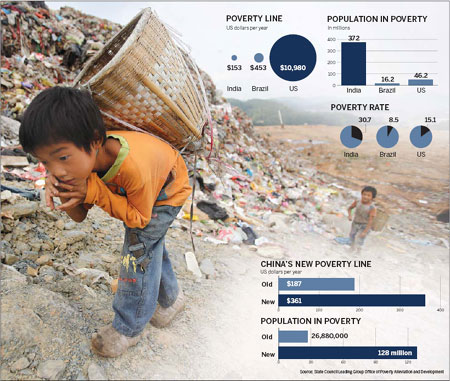
This is a picture of China's poverty.
This picture was taken in Singapore.
This is a picture of China's poverty.
Reflection of December Holiday


No comments:
Post a Comment